

Safety and control valves
A full-day training course on safety valves and control valves for those working in the process industry. You will gain both theoretical and practical knowledge of valve function, testing and maintenance, ranging from standards and regulatory requirements to troubleshooting and servicing. The course leaders are valve experts with extensive industry experience, and the content is tailored to your business.
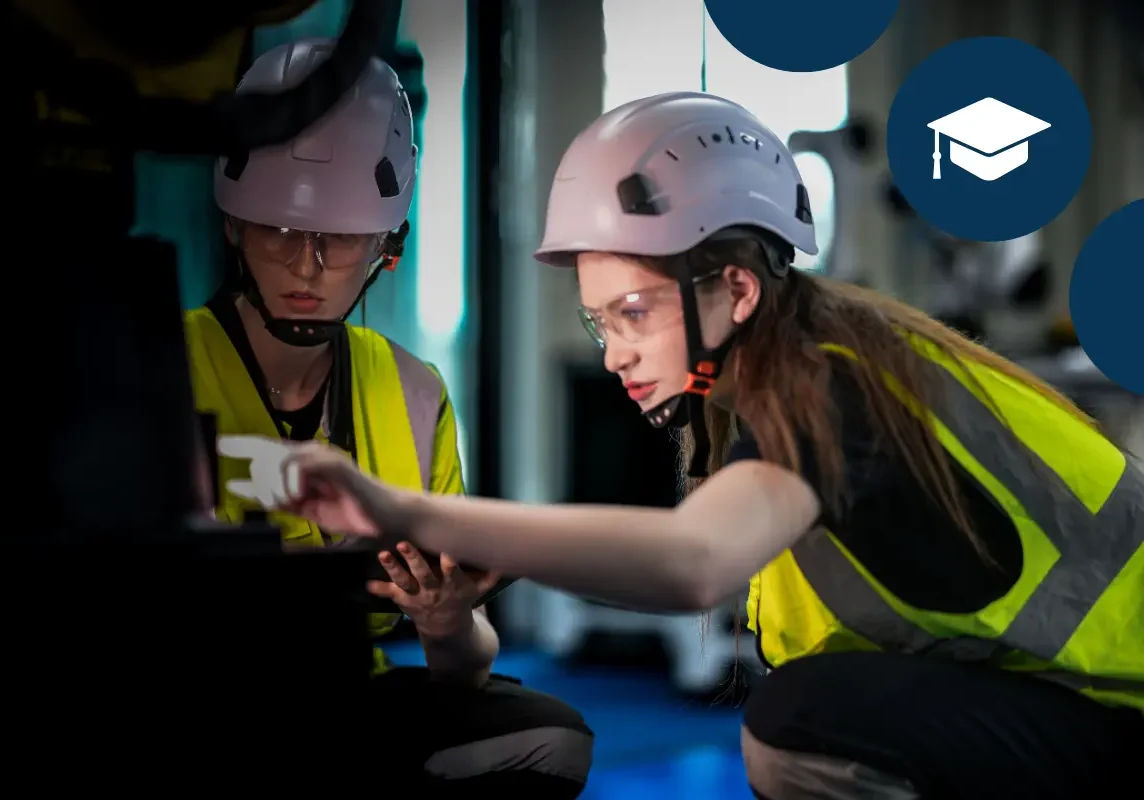
Register for our training courses

Who is this training aimed at?
The training is aimed at operations staff, maintenance staff and design engineers. In short, anyone who uses valves in production, carries out maintenance work, installs new valves or selects valves.
The course is held at our premises. Here, participants have access to well-equipped workshops where the theory covered can be immediately applied and clearly demonstrated. The course documentation includes a comprehensive general theoretical section on valves and their installation, as well as methods for calculating capacity and pressure drop.
Course objectives
Upon completion of the course, participants will be able to understand and handle both safety valves and control valves correctly and safely. Participants will be able to dismantle and perform refurbishment on a valve so that it continues to function correctly after refurbishment. Operation, installation, inspection and, above all, safety form the basis of the course content.
Course duration: Full day
Structure: Tailored to your company’s needs, held at your premises or at one of VIMAB’s five workshops
Price: Quoted based on group size and content
Course content
The course provides an insight into regulations, criteria for selecting valves and actuators, sizing in theory and practice, and the various types of valves available, including their advantages and disadvantages. The course also covers what is required to ensure a well-functioning process and what is needed in terms of specification requirements regarding the selection of valves. Below are the modules included in the course:
Training in valve operation
At VIMAB, we are happy to share our extensive experience in valve servicing. We now offer specialist training programmes and courses in this field. The aim is for you to learn skills that you can apply directly in your work. Theoretical and practical knowledge of valves, both manual and automated, is essential for improving safety and productivity.
Tailor-made course
Our training courses are designed to provide you with knowledge that you can put to immediate use in your work. That is why you and the other participants set the agenda. Our course leaders have extensive industry experience, so make the most of the opportunity to ask an expert your specific questions. The course is a natural meeting place for people with similar job roles, which means that the exchange of knowledge between course participants also becomes a natural and important part of the training.
Do you have any questions about the course content and dates?
Vi berättar gärna mer om alla möjligheter som finns.